3834-1 (707020), страница 3
Текст из файла (страница 3)
At the same time, depending on рН and alkalinity, water with rigidity of 4 mg-ecv/l can above cause in distributive system adjournment of slags and scums (a carbonate of calcium), is especial at heating. For this reason norms of Boiler inspection enter very rigid requirements to size of rigidity of the water used for a meal of boilers (0.05-0.1 mg-ecv/l). Besides at interaction of salts of rigidity with washing substances (the soap, detergent powders, shampoos) occurs formation of "soap slags" as foam. It results not only in the significant overexpenditure of washing-up liquids. Such foam after drying remains as a strike on the sanitary technician, linen, a human skin, on hair (unpleasant feeling of "rigid" hair well-known to much). The main negative influence of these slags on the person is that they destroy a natural fatty film with which the normal skin is always covered and hammer its time. An attribute of such negative influence is characteristic "scratch" of cleanly washed up skin or hair. It appears, that the irritation causing in some people feeling "soapiness" after using soft water is an attribute of that the protective fatty film on a skin is whole and safe. It also slides.
At the same time, it is necessary to mention and other side of a medal. Soft water with rigidity less than 2 mg-ecv/l has low buffer capacity (alcalinity) and can, depending on a level рН and of some other factors, render the increasedcorrosive attack to water pipes. Therefore, in a number of applications (it is especial in the heating engineer) sometimes it is necessary to carry out special processing of water with the purpose of achievement of an optimum ratio between rigidity of water and its corrosion activity.
EXPERIMENTAL PART
The adsorption processes including both processes cleanly including physical, and the processes conducting to formation of new chemical substances are rather various. Processes concern to them ion-exchange chromatographies proceeding between ionits and solutions of electrolit also.
Due to the universality and these processes have found of flexibility wide application in analytical chemistry, food and an iron and steel industry, in power system, water-preparation and in many other areas of a science and technics(technical equipment), and now supersede from an industrial practice other methods sorption [1-3]. Despite of the big assortment industrial ionits, the majority of them, especially, condensation type differ such low parameters, as low speed sorption, small stability to thermal, chemical influences, etc. It limits opportunities and spheres of their application [4,5].
By us it is received new monofunctional sulphocationite on the basis of interaction of styrene with an accessible and cheap waste of agricultural and cotton scraping industries.

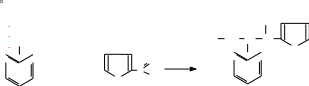
Sorption abilities of sulphocationite to ions of calcium, magnesium, copper, nickel carried out research from 0.1N solutions of СаСl2, MgCl2, CuSO4 and NiSO4. Sorption of calcium and magnesium determined by trilonometric, copper by iodometric, nickel by photocolorimetric methods [10,11].
According to the literary data, polymers and ion-exchangers, received on the basis of derivatives of furan differ from raised thermal and chemical stability and mechanical durability [5,6]. The basic properties of received sulphocationite are submitted in table 1.
Table 1
The main physical and chemical parameters of received sulphocationite
| № | Parameters | Values | |
| 1. | Bulk weight, g/ml | 0.68 | |
| 2. | Specific volume of bulk cationit in Н-form, ml/g | 3.5 | |
| 3. | Static exchange capacity, in mg - ecv/g, on: | ||
| 0.1N. solution of NaOH | 5,2 | ||
| 0.1N. solution of NaCl | 4.5 | ||
| 0.1N. solution of СaCl2 | Н-form | 4.2 | |
| Nа-form | 4.8 | ||
| 0.1N. solution of MgCl2 | Н-form | 3.0 | |
| Nа-form | 3.8 | ||
| 0.1 N. solution of СuSO4 | Н-form | 2.6 | |
| Nа-form | 3.0 | ||
| 0.1 N. solution of NiSO4 | Н-form | 2.15 | |
| Nа-form | 2.34 | ||
| 4. | Mechanical durability | 99 % | |
As is known in many regions of our republic used in a life and on manufacture water has high rigidity which sometimes reaches up to 12 mg-ecv/l instead of 2874-82 "Potable water" received according to GOST – 2.5-7 mg-ecv/l.
From the data of table 1 it is visible, that the examinee cationit possesses high enough parameters of size of exchange capacity on ions of calcium and magnesium. As object of research we had been used artesian water of area Shurchi in Surkhan-Darya area which has rigidity of 12.2 mg-ecv/l. Cationits tested in Н-and Na-forms.
1 gr. of cationit filled in 200 ml of researched water. In 24 hours water separated from cationit and determined its rigidity trilonometric method at the presence of the indicator chromogen black. Thus rigidity of water in the Н-form has made 4.5 mg - ecv/l, and in the Na-form of 2.2 mg - ecv/l.
Except for it we had been carried out researches on softening water of 2.5 mg-ecv/l having rigidity. After contact within 6 hours of water with cationit rigidity of it corresponded at use cationit in:
the Н-form – 0.8 mg-ecv/l;
the Na-form – 0.4 mg-ecv/l.
Results of the received researches testifies to perspectivity of work with the examinee with sulphocationite.
Vocabulary
| Adjournment Artesian water Cationit Anionit Sorption Sulphocationite Rigidity Indicator chromogen black Thrilonometric Bulk weight Condensation Hydrocarbonate Slag Scum Ionits Alkalinity Softening Calcium Magnesium. Sewage Corrosion activity Static exchange capacity Swelling capacity Iodometric, Photocolorimetric Chemical stability Thermal stability Reagent method Potable water Cotton scraping industries Polycondensation Correspond Сopper desorption Potentiometric titration Flexibility Specific volume | ––– –––––––––––––––––––––––––––––––––––––––––––––––––––––––––––––––––––––––––––––––––––––––––––––––––––––––––––– | Отложения Артезианская вода Катионит Анионит Сорбция Сульфокатионит Жесткость Индикатор хромоген черный Трилонометрический Насыпной вес Конденсация Гидрокарбонат Шлак Накипь Ионит Щелочность Умягчение Кальций Магний Сточные воды Деятельность коррозии Статическая обменная емкость Влажность Иодометрический Фотокалориметрический Химическая устойчивость Термическая устойчивость Реагентный метод Питьевая вода Хлопчатоочистительная пром. Поликонденсация Переписываются Медь Десорбция Потенциометрич. титрование Гибкость Удельный объем |
Список литературы
Полянский Н.Г. Сб. Синтез и свойства ионообменных материалов», М.: «Наука»,1968г.
Либинсон Г.С. Физико-химические свойства карбоксильных катионитов, М.: «Наука», 1969.
Гельферих Ф. «Иониты»,М.: Изд. ИЛ., 1962 г.
Таджиходжаев З.А. Разработка ионообменных и композиционных материалов многофункционального назначения на основе вторичных продуктов производств и технологии их получения».: Автореф. дисс. доктора технических наук. «, Ташкент.: 2002.
Муталов Ш.А., Турсунов Т., Назирова Р.А. Исследование сорбции ионов цветных металлов слабоосновными анионитами поликонденсационного типа./Ж. Композиционные материалы. № 2, С.7-8. Ташкент:. 2003.
Таджиходжаев З.А., Джалилов А.Т. Синтез и исследование свойств катионообменных смол на основе вторичных продуктов химических предприятий.// Ж. Прикл. химии. 1998. т. 72. № 9. С. 1578-1580.
Гриссбах Р. «Теория и практика ионного обмена», М.: Изд. ИЛ. 1963., с. 303 – 310.
Л.Беллами «Инфракрасные спектры сложных молекул», М.: ИЛ, 1963г.
Алексеев В.Н. «Количественный анализ», М.: Химия, 1972г.
Пешкова В.М., Громова М.И. Практическое руководство по спектрофотометрии и калориметрии. М.: Изд.«Московского Университета», 1965 г.