Диплом Английский (1209256), страница 2
Текст из файла (страница 2)
The next principle - the principle of "optimal limitations". In the process of designing new schemes are available several alternative solutions. Most often this occurs when modeling the constituent elements of the lowest rank of the system, such as weak essentially composed items assigned to other types. Each alternative scheme gives rise to its own set of constraints to be satisfied by the data placed in the appropriate table schema. The cost of supporting such restrictions is the main factor that should always be taken into account in assessing the quality and choice of the particular configuration of the model.
The support of the principles of specialization leads to the unification of the structural organization of the tables. The user works with hybrid structures where he sees only semantics, and key details are hidden from him and their support lies with the software.
As a rule, the work of database applications is based on the interaction of a user or group of users with a number of tables. But as the compliance with all the conditions and principles of organizational structure databases circumstances arise, ultimately, increase the number of table content to epic proportions. There is a division into classes of the tables with varying degrees of semantic coloring. At the top of the hierarchy are the so-called Semantics’ and Group's tables which have approximately the same semantic load, but differing amounts of stored information. From Group's name can be concluded that a dominant advantage over Semantics’ spreadsheets is their ability to work with the data groups.
The most extensive tabular database space is called Object tables. As the name implies, this class contains information about each object or group of objects. Compared with the above classes, this class of tables has a dull semantic coloring, and therefore a lower priority. However, along with other distinctive features, the amount Class takes pride of first place in the list of his shortcomings. No other structural formation is able to take a similar virtual space.
Unlike the simplified design and Semantics’ and Group's tables, the presented class can include an infinite number of the related tables. And, finally, a common set of data becomes integral so that the slightest change necessarily cause a chain reaction system in some areas. Consequently, the certain principles of the structural organization of databases comprise the stored information security assurance. Often, the above class has the character of an intermediate between Semantics’ tables and weak entities.
Communication elements of the separated tables are an integral part of maintaining the operability of the entire database. In the designated area, this function is assigned to the attributes. Each column, each row, and each item has its personal attributes that come into contact with the key fields of the related tables of the other systems. The Object table’s link attribute allows comparing the stored information with the fields of semantically above standing tables.
The Figure 1 shows the structural organization of the tables and their relationships in databases.

Figure 1 - Structural organization of database tables
The weak entities refer to the most poorly filled semantics of the class. There are very simple tables that are mostly informative but allow through command keys or embedded functions to communicate with the entire set of database systems. In some ways, these tables are a visual aid demonstration database operation. A continuous stream of information coming from the upper sublevels displayed in the pre-built interface.
The structural organization of the database is a single mechanism for handling user requests, thanks to the basic principles of construction of the systems included in it. Strict adherence to these requirements entails prospects optimization work with database elements.
Most of redundancy and problems connected with it do not have much influence on overall system performance. This is due to the fact that updating occurs only when downloading the new data volume. This results in the addition of the new data and recalculates results.
In the end, all of the table database objects acquire a certain specialization which in addition to their appointment is expressed in their structural organization.
Below (Fig. 1.2), as an example, is a typical structural organization of the cluster comprising a plurality of interconnected tables required to provide information about a subset of homogeneous (characterized by the same set of properties) entities.
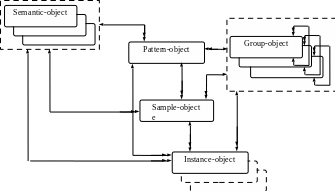
Figure 1.2 - The structural organization of the cluster
1.2 Standard Procedures for Manipulating Data at OLTP - tasks
From the point of view of the main peculiar features of the business environment and directly dependent on their level of data normalization, the two main classes of systems can be distinguished based on the relational approach to the data; but this entails only the OLTP-systems.
Highly normalized data model is well suited for the so-called OLTP-applications. Typical examples of OLTP-applications are inventory control systems, ticket ordering system, and banking system performing the operations on money transfer, etc. The main function of such systems is the simultaneous execution of a large number of short transactions. Transaction is an indivisible sequence of data manipulation statements executed as a unit and transforms the database from one coherent state to another consistent state. Transactions are also data recovery units after a crash, i.e., recovering, the system eliminates the traces of the transaction, did not manage to finish as a result of a software or hardware failure.
Transactions themselves appear relatively simple, such as "to withdraw money from account A and to add this amount to the account "B ", to arrange the purchase of the consignment stock", and "to sell a passenger ticket for a specified train at a given place and at a certain date."
Here are the main peculiar features of the OLTP-applications:
-
The number of transactions is quite extensive;
-
Transactions performed simultaneously (the system can be connected to several thousands of users simultaneously) ;
-
If an error occurs, the entire transaction must be rolled away, and return the system to its original state before the transaction;
-
Almost all the database queries that should be performed in real-time commands consist of insertion, updating, and deletion.
Requests for selection in OLTP-system are mainly designed to enable the users to select from a variety of directories, and the majority of these requests are known in advance at the stage of system design. If the complicated analytical queries meet, the time of their performance is not essential for the system operability.
Thus, critical for OLTP-applications is the speed and reliability of execution of short operations related to updating the data. The higher the level of normalization of the data in OLTP-application, the faster and more reliable it is. Exceptions to this rule can occur when at the stage of development are known some frequently arising queries that require connection of the relationships on whose speed of performance substantially depends the work of the application. In this case, you can contribute to facilitating the normalization of such requests.
The main requirements for the OLTP systems are as follows:
-
The degree of detail of the data stored. A typical request in the OLTP-system tends to selectively affect the individual records in the tables which are effectively extracted by using the indexes;
-
The quality of the data. The OLTP-systems usually store information entered directly by users of the systems (computer operators). The presence of the "human factor", when entering the information, increases the likelihood of erroneous data; and can create the local problems in the system;
-
The data of the storage format. The OLTP-systems serving different areas of work are not linked. They are often implemented on different hardware and software platforms. The same data in different databases can be presented in different forms and cannot be the same: for example, the data about the client, who interacts with the various departments of the company, may not be the same in the databases of these departments;
-
The admission of the redundant data. The structure of the database serving the OLTP- system is usually quite complicated. It may contain dozens or even hundreds of tables that refer to each other. The data in this database are strongly normalized to optimize the occupied resources. The analytical queries to the database are very difficult to formulate and run very inefficiently because they contain the views that combine a large number of tables;
-
The data management. The main requirement for the OLTP- systems is to ensure the implementation of the modification of the operations on the database. It is assumed that they must be executed in real time, and they are often very intense;
-
The amount of the stored data. As a rule, the analysis systems are designed for the analysis of time dependencies, while the OLTP-systems usually deal with the current values of any parameters;
-
The nature of the data inquiries. Due to normalization of the database, in the OLTP-systems, drawing up the queries is considered to be a difficult job and requires the necessary qualification;
-
The time of processing the queries for the data. The OLTP-systems typically operate in real time therefore they are subject to stringent requirements for the data processing;
-
The character of the computational load on the system. As previously mentioned, the work with the OLTP-systems, is usually performed in real time mode;
-
The priority of the system characteristics. For the OLTP-system, the priorities are high performance and data availability because the work with them is carried out in the real time mode. For the analysis of systems, the higher priority tasks are to ensure flexibility of the system and independence of the user experience, i.e. what is needed to analyze the data analysts.
The OLTP-systems are optimized for small discrete transactions. But the queries for some complex information (for example, the quarterly dynamics in a particular model of sales volumes of goods in a particular branch) that are typical of the analytic applications (the OLAP) would give rise to the complex compounds of the tables and review of the entire tables. One such inquiry will take a lot of time and computer resources that will slow down the processing of the current transactions.
The OLTP tasks combine the full range of the functions including review, modification, insertion, and deletion of data. The OLAP tasks are more narrowly focused and able to provide the user only with the reading function.
The OLAP systems represent decision support systems, data warehousing and database mining systems. Such systems are designed to establish the relationships between the data or to analyze, to answer the question "what if ...".
The OLAP-applications operate on large data sets; already accumulated over a long period of time using the OLTP-applications, spreadsheets, and other data sources.
The OLAP-systems are characterized by the following features:
-
Adding the new data into the system is relatively rare in large blocks;
-
The data added to the system are usually never deleted;
-
Before loading, the data undergo the different "cleaning" procedures: the data can enter into a single system from many different sources with different presentation formats for the same concepts and the data may be incorrect and erroneous;
-
The queries for the system are unregulated and are generally quite complex. The new request is very often generated by the analyst to clarify the results obtained when implementing the previous task;
-
The speed of executing the queries is important, but not critical.
The OLAP-data applications are typically represented in the form of one or more of hypercube whose measurements represent the reference data in the cells.
Standard procedures for manipulating data in the OLTP systems can be considered a modification of functions which include a set of operations. It is understood as a modification of any change in the content and the data format.
The most popular procedures may be considered searching, inserting, and borrowing. Their work is carried out by sending a query to the addressed tables and getting ready to receive the reports with the prepared result and decision that the user can track in the real time mode. The search can be performed by any criteria fields’ content that provides the application interface.
Insertion allows adding the new elements and entities in already existing tables of the data. The versatility of this procedure allows working both with text instances, calendar values, the samples in the so-called pits and the complex of some numerical expressions that have some meaning. During the insertion, the user needs to know the end result of their actions. The main objective for the insertion is to provide structuredness and data integrity. It is this function that acts as the leader of the modification processes because the application operator, as a rule, only adds the new values to the database, sometimes making changes to the existing partitions or removing them.